

One night a few months ago, I sat in my car outside a grocery store for nearly an hour after finishing my shopping. The bags were already in the trunk, the air conditioning was running, and music played softly through the speakers, but I still could not bring myself to drive home.
The Night I Stopped Pretending Everything Was Fine
That same night I remember unlocking my phone over and over again, opening the same apps repeatedly without even realizing I was doing it. Messages stayed quiet. Notifications never came. At one point I opened my contacts list and stared at it longer than I cared to admit.
In that moment, the truth hit me in a way it never had before.
There was nobody I could genuinely call.
Nobody I could text just to say I was having a rough day. Nobody I could reach out to without feeling like I was interrupting their life or forcing my existence into their evening. And sitting there in that parking lot, surrounded by strangers walking in and out of bright grocery store lights, I finally admitted something to myself without trying to soften it or make it sound less sad:
I have no friends.
Even typing those words feels uncomfortable because loneliness carries a strange kind of shame, especially as an adult. Society quietly teaches us that friendship should happen naturally forever. If you do not have close people around you, then something must be wrong with you personally. People assume you must be awkward, difficult, boring, or emotionally exhausting.
So instead of saying the truth directly, most people hide behind softer language. They say they are busy. They say they are focused on themselves. They say they enjoy solitude. Sometimes those things are true. But sometimes people are deeply lonely and simply trying to make their loneliness sound intentional instead of painful.
Loneliness Is Much Quieter Than People Think
One thing I have learned is that loneliness rarely looks dramatic from the outside. Most lonely people are not visibly falling apart in public. They still wake up, go to work, answer emails, pay bills, laugh at jokes, and function normally in everyday life. They might even seem emotionally stable to everyone around them.
Then they go home to silence that feels emotionally crushing.
That is the kind of loneliness people rarely discuss honestly. The invisible kind. The quiet kind. The kind that slowly settles into your life without one huge event announcing its arrival.
Sometimes friendships disappear gradually instead of dramatically. People move away. Priorities change. Relationships fade from daily conversations into occasional reactions on social media. One day you realize months have passed since someone checked on you sincerely. Your phone stays silent unless somebody needs information, a favor, or something practical from you.
I think that is what makes emotional isolation so confusing. There is not always a clear explanation for it. Sometimes there is no betrayal, no massive fallout, and no obvious reason why you suddenly feel disconnected from everyone around you.
It just happens slowly.
And eventually you wake up one day realizing you genuinely feel like I have no one in my life who truly knows me anymore.
What Happens When You Have No One to Talk To
I believe one of the hardest parts about loneliness is what it does to your inner voice over time. When people stop reflecting warmth, attention, and emotional presence back to you consistently, your mind starts filling the silence with self-criticism.
You replay conversations afterward.
You overanalyze your personality.
You wonder if there is something deeply wrong with you.
Questions start appearing in your head at random hours of the night.
“Am I forgettable?”
“Why does connection seem easier for everyone else?”
“Did I do something wrong?”
“Why do I feel invisible all the time?”
Loneliness has a dangerous way of becoming personal. Instead of recognizing isolation as a painful human experience that millions of people go through, people often treat it like evidence that they are fundamentally flawed.
That mindset slowly changes you.
After enough time alone, reaching out starts feeling emotionally risky. Even sending a simple message can feel terrifying because rejection begins carrying unbearable emotional weight. When somebody already feels abandoned internally, even delayed replies can feel painful.
I know this feeling more than I wish I did.
There were moments where I desperately wanted companionship while simultaneously feeling emotionally exhausted by the idea of trying again. I wanted connection badly, but I had stopped believing my presence mattered enough for anyone to notice.
That combination of loneliness and hopelessness is difficult to explain unless you have experienced it personally.
Having No Friends Is More Common Than I Realized
The older I get, the more I realize how many people quietly carry this exact pain. You can see evidence of it everywhere once you start paying attention. Some people reach a point where they think, “I have no friends.” Others struggle with questions like, “Who do I talk to when I have nobody?” or wonder what to do when they have no one to talk to. Usually, they are desperately searching for validation, proof that someone out there understands what they’re feeling.
Human beings are not built for emotional invisibility.
Modern life has created this strange contradiction where people are constantly connected digitally while feeling emotionally disconnected in reality. We have endless notifications, social media updates, and surface-level interactions, yet many people still feel deeply unseen.
You can technically talk to people every day and still feel emotionally abandoned.
I think that confusion makes loneliness even heavier. People start wondering how they can feel isolated in a world where everyone appears connected all the time. But closeness and communication are not the same thing. Being surrounded by people does not automatically mean you feel emotionally safe, understood, valued, or loved.
Some of the loneliest people in the world are sitting in crowded rooms pretending they feel included.
Why Feeling Alone Starts Changing You
There is another side to loneliness that people rarely discuss openly: shame.
Loneliness becomes embarrassing once you reach adulthood because society quietly expects everyone to already have their people. Everywhere you look, there are group photos, birthday dinners, vacations, weddings, and friendships that appear effortless. Meanwhile, you are sitting alone wondering how everybody else figured out the connection while you somehow missed it entirely.
Social media makes this feeling infinitely worse. Every scroll becomes another reminder of belonging happening somewhere else. After enough exposure to those images, people begin internalizing their loneliness and assuming it must mean something negative about their worth as human beings.
But I honestly do not believe loneliness automatically means somebody is broken.
Many lonely people are simply emotionally exhausted.
Some grew up without emotionally healthy relationships and never learned what safe connection feels like. Others became isolated after grief, illness, burnout, relocation, divorce, caregiving, depression, or years of emotional disappointment. Life can disconnect people quietly over time without them even realizing it until the loneliness becomes overwhelming.
Not everybody who feels isolated fails socially.
Sometimes they are just tired.
The Grief of Feeling Like I Have No One
The best way I can describe chronic loneliness now is invisible grief. When you consistently lack meaningful connection, you are grieving experiences you wish existed in your life. You are grieving emotional safety, companionship, support, shared memories, and the comfort of knowing somebody genuinely cares about your existence.
Even ordinary moments begin feeling heavier when you experience them alone for too long.
Bad days become harder because there is nobody helping you carry the emotional weight. Good news feels strangely empty because there is nobody celebrating sincerely beside you. Weekends feel longer. Nights feel louder. Silence itself begins affecting your mental state in ways that are difficult to explain.
I think that is why loneliness often becomes strongest at night. During the day there are distractions, responsibilities, conversations, and noise. But nighttime removes those distractions and leaves people alone with their thoughts.
And when you are constantly having no one to talk to, silence can become emotionally overwhelming very quickly.
Human Beings Need Real Connection
I do not think people are weak for wanting emotional closeness. In fact, I think modern culture sometimes glorifies independence so aggressively that people begin feeling ashamed for needing support at all.
But human beings are relational by nature.
We need warmth.
We need conversation.
We need reassurance.
We need spaces where we feel emotionally safe enough to be honest.
No amount of scrolling, productivity, or pretending replaces genuine human connection. That is why the sentence “I have no friends” hurts so deeply. Underneath those words is usually another sentence people are too afraid to say directly:
“I do not feel emotionally connected to anyone.”
That pain deserves compassion, not judgment.
What Finally Changed My Perspective
One realization changed my perspective completely: loneliness does not necessarily mean someone failed socially. Sometimes it simply means their current environment is no longer emotionally nourishing. Sometimes life pulls people apart. Sometimes emotional exhaustion damages confidence so deeply that reaching out stops feeling safe.
But none of those things mean meaningful connection is impossible in the future.
I think lonely people often imagine friendship as something effortless that naturally happens for everybody else. In reality, most deep relationships are built slowly through vulnerability, consistency, emotional safety, and honesty.
When you have no one to talk to, you are not looking to fix the problem with huge social circles. You simply want one real connection. One person who listens carefully, checks in sincerely, and makes you feel less invisible in the world.
That desire is deeply human.
Why Relative Choice Matters to Me
That is exactly why I wanted to align my voice with Relative Choice. This space does not approach loneliness with judgment, forced positivity, or shallow advice. It understands that millions of people are quietly carrying emotional isolation while pretending they are perfectly fine because they feel ashamed to admit otherwise.
What makes this community meaningful to me is the honesty it encourages. Real honesty. The kind where people can finally admit they feel disconnected, lonely, emotionally exhausted, or tired of pretending independence feels empowering all the time.
I think there is something deeply healing about being able to say those things openly without feeling weak for it.
Sometimes healing begins the moment somebody finally feels understood.
To Anyone Reading This While Feeling Completely Alone
If you are reading this while feeling isolated from the world around you, I want you to know your loneliness is not proof that you are unlovable or broken. Your current situation does not define your entire future, even if it feels permanent right now.
I may not know your exact path, but I know that dark room. I feel you, because I have been there too. I know what it feels like to overthink every interaction afterward, to wonder whether anybody notices your absence, and to carry emotional heaviness quietly because you no longer know who to talk to about it.
But I also know this: human lives change unexpectedly. People find community later in life. People discover a chosen family in places they never expected. People reconnect, rebuild, and heal socially after believing they never would.
So if your heart feels heavy right now, please do not treat this season of loneliness like your permanent identity.
Thank you, genuinely, for spending your time here with me today. I appreciate it more than you probably realize. More than anything, I hope this becomes more than just another article floating around online. I hope it becomes part of a real extended family where people can show up honestly, imperfectly, and without pretending they have everything figured out.
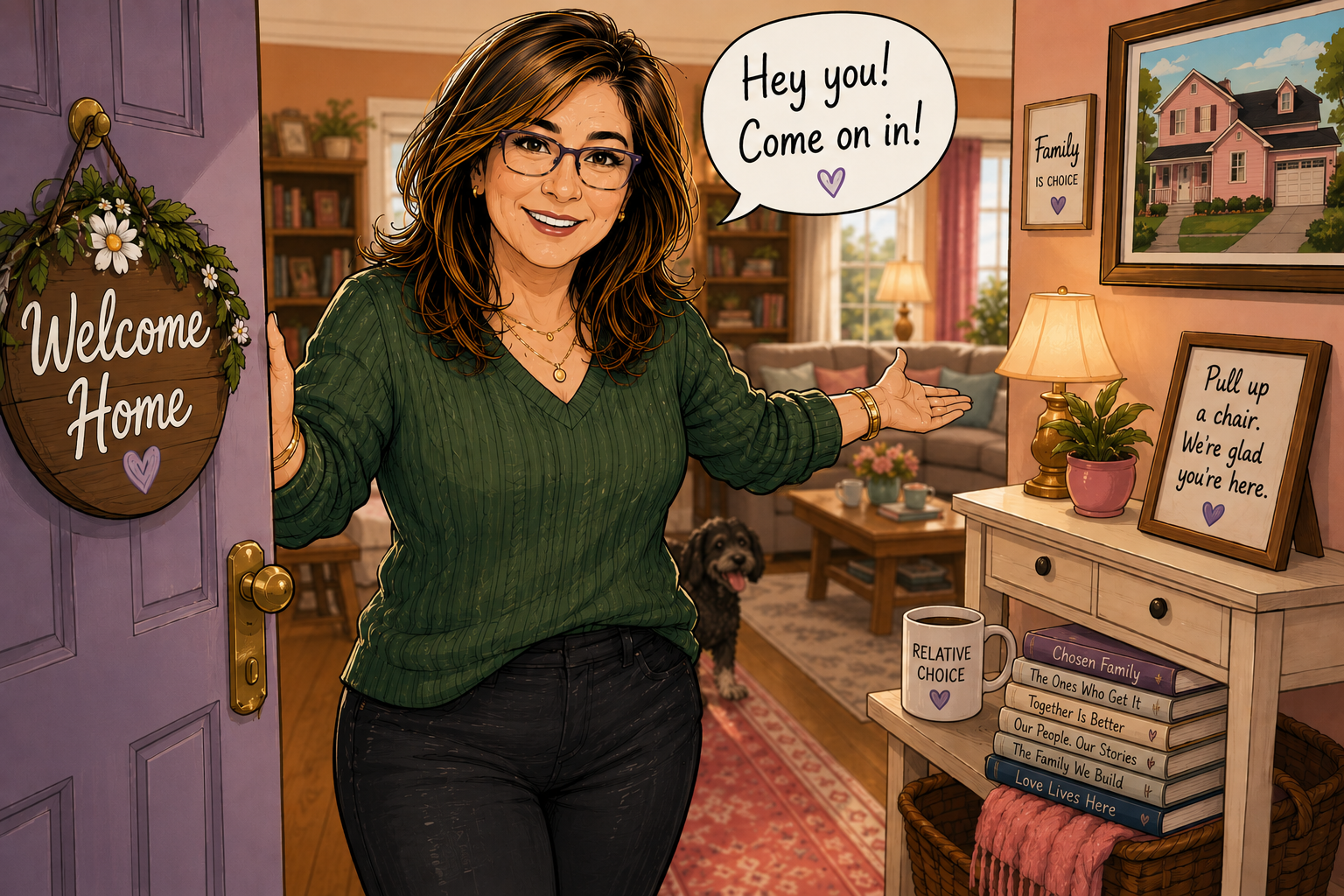
Please connect however it feels comfortable to you. Leave a comment, share your story, ask a question, or simply stay quietly for a while until you feel ready. However you arrived here, you are welcome here.
Truly.



Leave A Comment