
This isn’t built on a hunch.

Relative Choice™ exists because the evidence demands it. The loneliness crisis is real, it’s serious, and until now nobody has built a proper solution for it.

Here’s what the research actually shows.

Want to know the personal story behind why this research matters to us? Read Robin’s story here.

Scroll Down

How many people are we talking about?

Between 50 and 100 million Americans currently lack adequate family support. That’s not one demographic, one age group, or one type of situation. It’s a crisis that cuts across every part of society.

  • 22% of adults say they don’t have a single person in their life they feel truly close to — a number that has tripled since 1990. (Survey Center on American Life, 2021)

  • The number of older adults who are strictly kinless — no spouse, no children, no nearby family — is projected to grow by 50% as the Baby Boomer generation ages. (Margolis & Verdery, Journals of Gerontology)

  • 67+ million adults in the US are estranged from at least one family member. (Pillemer, Fault Lines, 2020)

  • Over 20,000 young adults age out of foster care every year without a permanent family. (U.S. Children’s Bureau, AFCARS)

  • 1 in 3 parents say they have no one to turn to for childcare or emergency help. (Center for American Progress)

There are nearly 40 documented reasons people find themselves without the family they need. Estrangement, loss, life circumstances — whatever the route, the destination is the same: going through life without the family support that most people take for granted.

If any of this sounds familiar, you’re not alone — and there’s a place being built for you. Learn about the community here.

Scroll for more

This isn’t just an emotional problem.

In 2023, US Surgeon General Dr. Vivek Murthy declared loneliness a public health crisis. The physical consequences are as serious as any chronic illness.

The mortality impact of being socially disconnected is similar to that of smoking 15 cigarettes a day.Dr. Vivek Murthy, US Surgeon General, 2023

  • Social isolation increases the risk of premature death by 29%. (Holt-Lunstad, Perspectives on Psychological Science, 2015)

  • Loneliness is linked to a 32% increase in the risk of stroke and heart disease. (Valtorta et al., Heart Journal, 2016)

  • People lacking strong social ties have a 40% increased risk of dementia and Alzheimer’s. (The Lancet Commission on Dementia, 2020)

  • Socially isolated individuals face significantly increased risk of diabetes, hypertension, and other chronic conditions. (Chakraborti, 2020)

  • People without strong family support networks are significantly more vulnerable to financial hardship, including housing instability and poverty. (Pew Research Center)

Scroll Down

The good news: chosen family is as effective as biological family.

A significant body of research shows that people who build strong chosen family networks experience the same health, emotional, and practical benefits as people with strong biological family ties.

  • Strong non-biological kinship networks enhance emotional stability and reduce stress-related diseases by acting as a buffer against the physiological effects of stress. (Elmitt, 2020)

  • People who lack biological family but build chosen families are just as likely to receive financial assistance and elder care as those with strong biological family ties. (Surtees, 2017)

  • Kin-like social networks among elderly adults improve mental health, decrease cognitive decline, and provide practical caregiving support. (Ghosh & Sanyal, 2019)
  • Single parents who build strong support networks report similar levels of wellbeing and resilience as parents with extended biological families. (Madureira, 2024)

According to Dr. Karl Pillemer, Professor of Human Development at Cornell University and author of Fault Lines, the loss of family is a major public health issue — and millions of people need better social structures to help them find alternative ways to connect.

What’s been missing is a structured, safe, purpose-built way for people to find each other. That’s what Relative Choice™ is here to provide.

Scroll for more

Does starting online actually work?

Relative Choice™ isn’t designed to keep people in an endless loop of digital interaction. The goal is real relationships — whether that means showing up virtually for your chosen extended family, or building one-on-one chosen family connections in the real world.

That’s exactly what the Relative Choice™ app is designed to make possible. Learn more about the app here.

So the question matters: does starting online actually work?

The research says yes.
  • Online platforms are not digital dead-ends. Research shows that the majority of people who form deep online relationships eventually move them into other channels — phone, in-person, and beyond. (Parks & Roberts)

  • Meeting online actually accelerates intimacy. The “Hyperpersonal Model” shows that online interaction removes the noise of physical judgment, allowing people to be more authentic and vulnerable than they might be in person — building trust faster. (Walther, 1996, updated 2021)

  • Intentional online search produces stronger bonds. When people seek connection based on shared values rather than circumstance, the relationships that form are more stable and more meaningful. (Rosenfeld, 2017)

  • For those who have experienced biological family rejection, online chosen family networks provide identical health and mental health benefits to biological families. (Fisher et al., 2024)

  • Structure is the key ingredient. The transition from online to offline is most successful when a platform provides a clear pathway. Without it, connections stay digital. With it, they become real. (Ramirez et al., 2015)

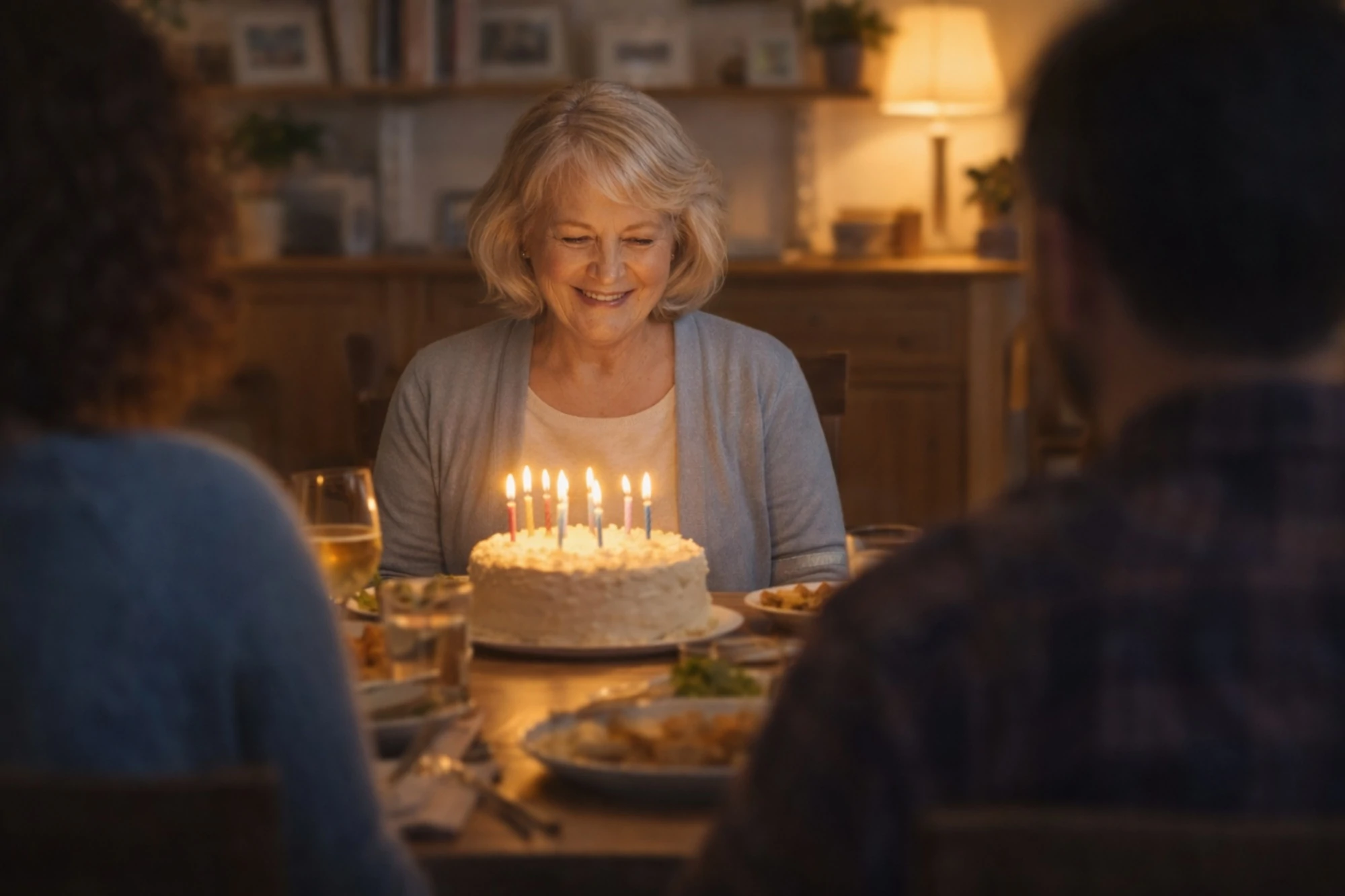
Celebrating a birthday with chosen family - Relative Choice
Scroll Down

The evidence points to one conclusion.

The scale of the problem is enormous. The consequences of doing nothing are serious. And the research shows clearly that chosen family works — that it delivers the same belonging, health outcomes, and practical support as biological family.

What’s been missing is a structured, safe, purpose-built way for people to find each other. That’s what Relative Choice™ is here to provide.

The research is clear. The need is real. And there’s a place waiting for you.